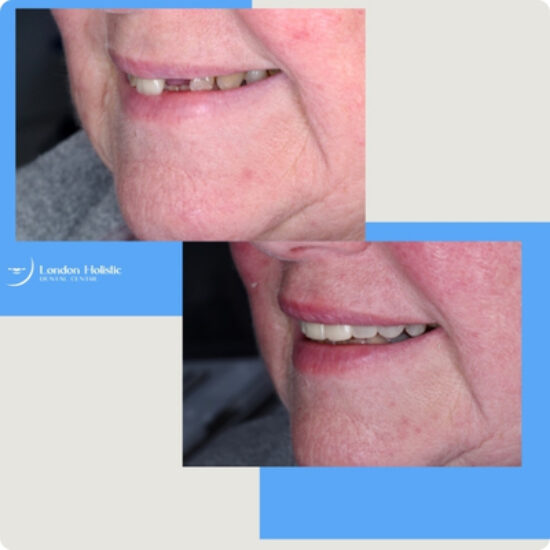
Bridge treatment is planned only after careful consideration of the surrounding teeth, the bite, and long-term predictability.
Dental implants, removable dentures, or leaving the space.
Many years with good cleaning and regular review.
A dental bridge replaces one or more missing teeth by bridging the gap with a natural-looking false tooth, supported by the neighbouring teeth or implants. It restores both function and appearance, helping you chew and speak comfortably again while maintaining your bite alignment. It’s a reliable, long-term solution designed to blend seamlessly with your smile. If you’re unsure whether a bridge is right for you, we can assess this during your visit and guide you through the most appropriate options.
There are a few different types of bridges depending on your needs and what your teeth can support. Traditional bridges are the most common, while cantilever bridges are used when support is only available on one side. Maryland bridges are more conservative and use a bonded framework to preserve more of your natural tooth structure. If you’re unsure which option suits you better, we can assess this during your visit and guide you through the most appropriate options.
A dental bridge usually takes two visits to complete. At the first appointment, the supporting teeth are prepared, and impressions are taken, which are then used to create your custom bridge. At the second visit, it’s carefully fitted, adjusted, and secured in place for a natural finish. If you’re unsure about the timeline in your specific case, we can assess this during your visit and guide you through the most appropriate options.
Looking after a dental bridge is straightforward but important for long-term success. Brushing twice daily and flossing around the bridge helps keep the area clean and prevents plaque build-up. We may also recommend interdental brushes or mouthwash for extra protection. With good care and regular check-ups, your bridge can last for many years. If you’re unsure about the correct cleaning routine, we can assess this during your visit and guide you through the most appropriate options.
The procedure is usually comfortable and carried out under local anaesthetic, so you shouldn’t feel pain during treatment. It’s normal to have mild sensitivity or tenderness for a few days afterwards, but this settles quickly. Once fitted, your bridge should feel natural and secure in your mouth. If you’re unsure about what to expect, we can assess this during your visit and guide you through the most appropriate options.
Schedule a convenient appointment with our dental professionals and take the first step toward a healthier, brighter smile.
See how we’ve helped patients achieve healthy, confident smiles through personalised care, advanced treatments, and a compassionate, family-focused approach.
Discover MoreI had an excellent experience with Dr Nader Botros. From start to finish, the level of care and professionalism was outstanding. Dr Botros took the time to explain everything clearly and made sure I felt...
My partner and I love visiting the London Holistic Dental Centre and consider David to be a consummate professional with outstanding interpersonal skills and brilliant dentistry. He is supported by a friendly, well-chosen team within...
As a fellow dental practice, we have been very impressed with the standard of care provided by Dr Nader Botros and his team. Their approach clearly prioritises holistic, patient-centred dentistry, with a strong focus on...
Exceptional service. The whole team was very professional. I have been having many dental issues that have resulted in a lot of pain and frustration over time. Dr Nader Botros eased my anxiety and answered...
Dear David and team, Just a short note to say how delighted I am with the dentistry I have had. I am so pleased with the final results of the Invisalign treatment and would have...
I had an excellent experience with Dr Nader Botros. From start to finish, the level of care and professionalism was outstanding. Dr Botros took the time to explain...
My partner and I love visiting the London Holistic Dental Centre and consider David to be a consummate professional with outstanding interpersonal skills and brilliant dentistry. He is...
As a fellow dental practice, we have been very impressed with the standard of care provided by Dr Nader Botros and his team. Their approach clearly prioritises holistic,...
Exceptional service. The whole team was very professional. I have been having many dental issues that have resulted in a lot of pain and frustration over time. Dr...
Dear David and team, Just a short note to say how delighted I am with the dentistry I have had. I am so pleased with the final results...