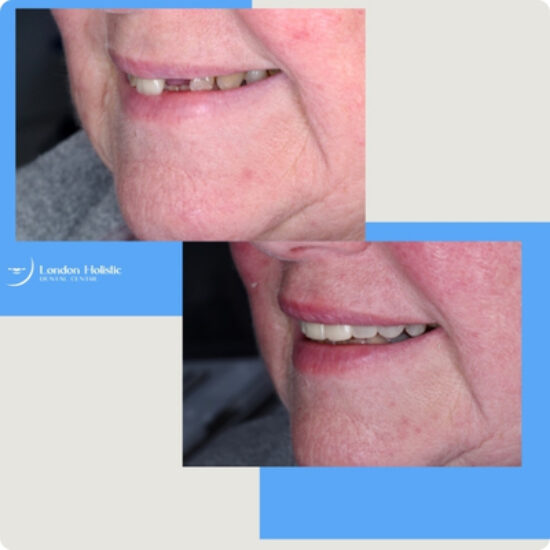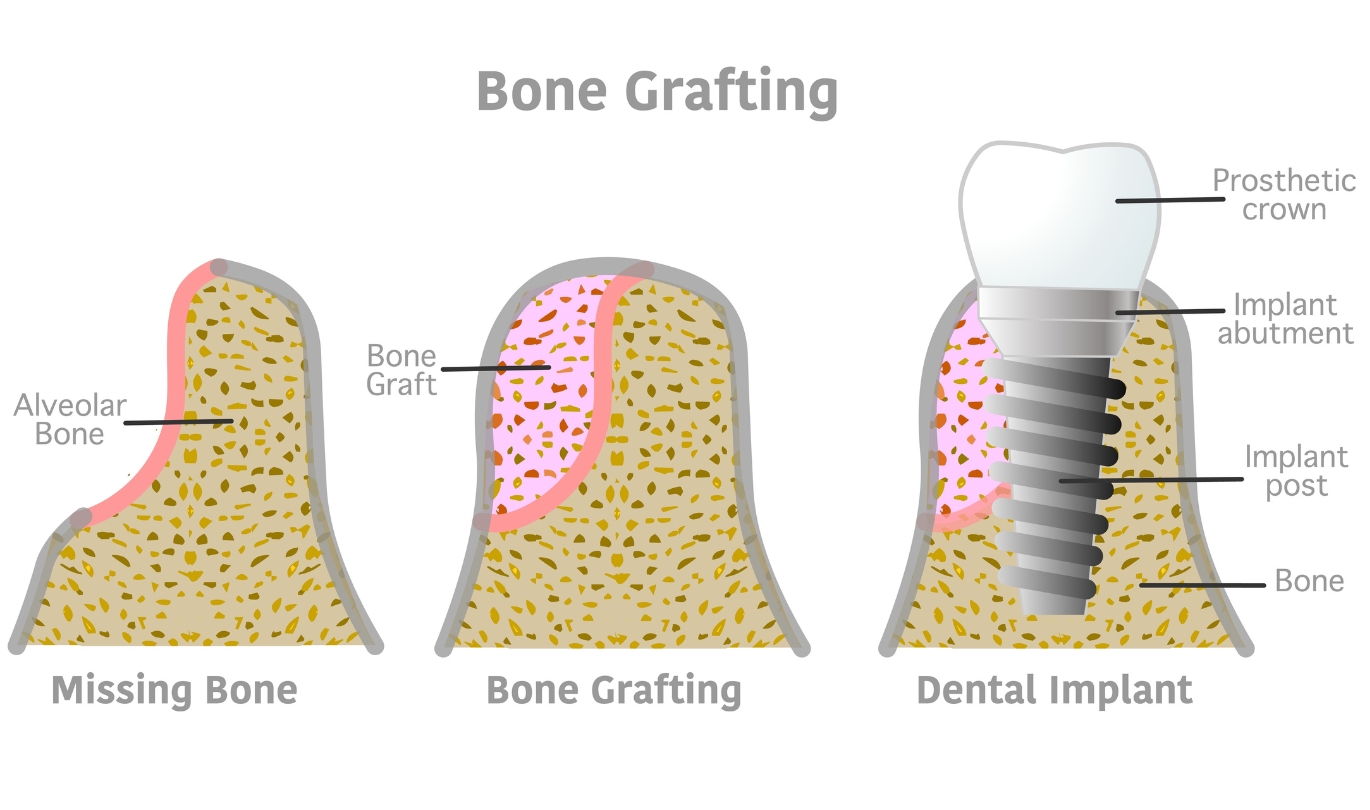
It helps rebuild the foundation needed for stable implant placement.
Grafting may be carried out before or at the time of implant placement, depending on the clinical situation.
Bone can be reduced after tooth loss, affecting implant support.
Bone grafting can extend your overall treatment timeline, as the area needs time to heal and integrate before moving on to the next stage, particularly with dental implants. This healing phase is important for creating a strong, stable foundation and can take a few months. While it may feel like an extra step, it significantly improves long-term success and reduces the risk of future complications. If you’re unsure, we can assess this during your visit and guide you through the most appropriate options.
Most patients are pleasantly surprised by how manageable the procedure is. It’s carried out under local anaesthetic or sedation, so you’ll be comfortable throughout, with only mild soreness afterwards. Any swelling or discomfort is usually short-lived and can be controlled with standard pain relief. Recovery is generally straightforward, and most patients return to normal routines quickly. If you’re unsure, we can assess this during your visit and guide you through the most appropriate options.
Not always, but it is often recommended when there isn’t enough healthy bone to support a restoration such as an implant. This can happen due to tooth loss, gum disease, or natural bone shrinkage over time. Your dentist will use detailed imaging to assess your bone levels and decide what’s better for your case. In some situations, alternatives may be possible, but grafting often provides the most predictable long-term result. If you’re unsure, we can assess this during your visit and guide you through the most appropriate options.
Schedule a convenient appointment with our dental professionals and take the first step toward a healthier, brighter smile.
See how we’ve helped patients achieve healthy, confident smiles through personalised care, advanced treatments, and a compassionate, family-focused approach.
Discover MoreI had an excellent experience with Dr Nader Botros. From start to finish, the level of care and professionalism was outstanding. Dr Botros took the time to explain everything clearly and made sure I felt...
My partner and I love visiting the London Holistic Dental Centre and consider David to be a consummate professional with outstanding interpersonal skills and brilliant dentistry. He is supported by a friendly, well-chosen team within...
As a fellow dental practice, we have been very impressed with the standard of care provided by Dr Nader Botros and his team. Their approach clearly prioritises holistic, patient-centred dentistry, with a strong focus on...
Exceptional service. The whole team was very professional. I have been having many dental issues that have resulted in a lot of pain and frustration over time. Dr Nader Botros eased my anxiety and answered...
Dear David and team, Just a short note to say how delighted I am with the dentistry I have had. I am so pleased with the final results of the Invisalign treatment and would have...
I had an excellent experience with Dr Nader Botros. From start to finish, the level of care and professionalism was outstanding. Dr Botros took the time to explain...
My partner and I love visiting the London Holistic Dental Centre and consider David to be a consummate professional with outstanding interpersonal skills and brilliant dentistry. He is...
As a fellow dental practice, we have been very impressed with the standard of care provided by Dr Nader Botros and his team. Their approach clearly prioritises holistic,...
Exceptional service. The whole team was very professional. I have been having many dental issues that have resulted in a lot of pain and frustration over time. Dr...
Dear David and team, Just a short note to say how delighted I am with the dentistry I have had. I am so pleased with the final results...