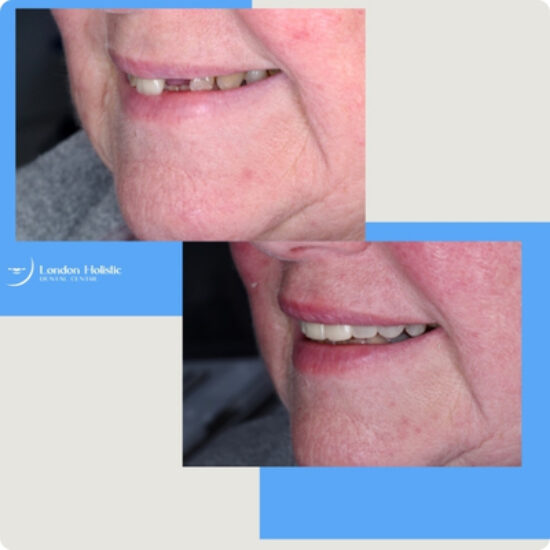
Dental implants have long been associated with titanium — and for good reason. Titanium has decades of research behind it and remains the most widely used implant material in the world. But for a growing number of patients, ceramic implants offer something different: a fixed, long-term tooth replacement with no metallic components.
Here’s what ceramic implants are, who they suit, and what the process looks like at London Holistic Dental Centre.
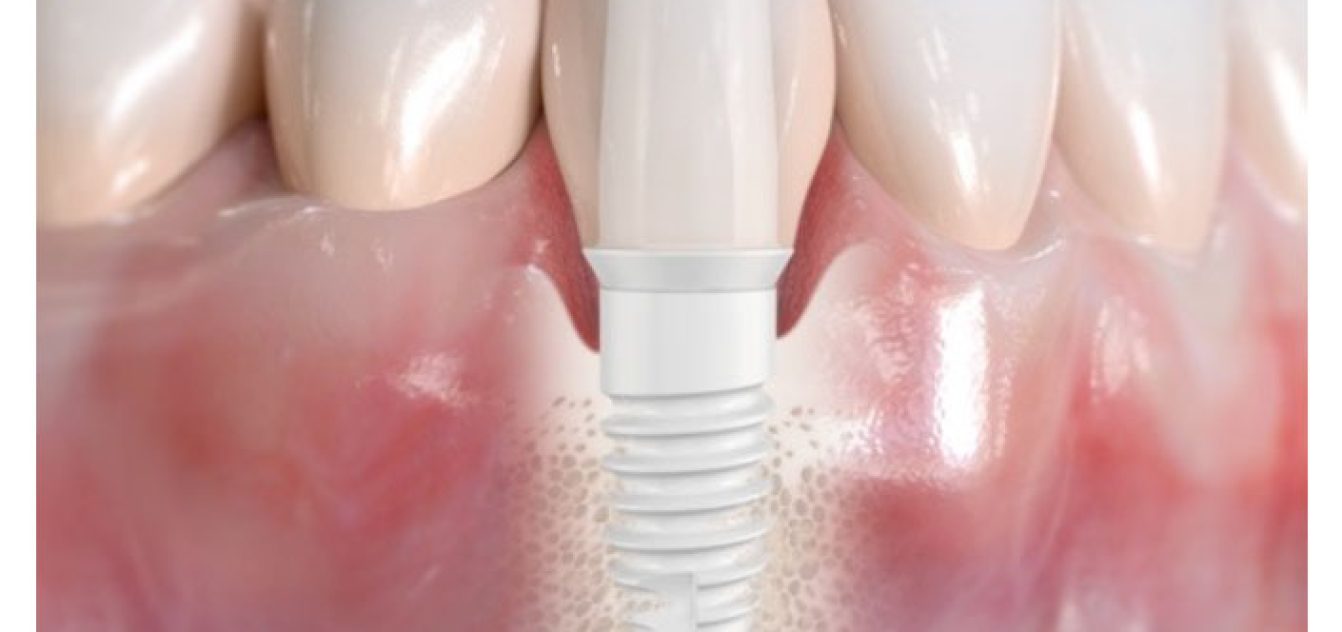
Ceramic implants are made from zirconia, a high-strength material derived from zirconium oxide. Unlike titanium, zirconia contains no metallic components — it’s a ceramic compound that is both biocompatible and exceptionally durable.
In function, ceramic implants work in exactly the same way as titanium. They are placed into the jawbone, integrate with the surrounding bone through a process called osseointegration, and support a crown, bridge, or other restoration once fully healed.
The key differences are material-based rather than functional — which is why the choice between the two is a personal and clinical one, not a straightforward better-or-worse comparison.
Ceramic implants tend to appeal to patients who:
It’s worth being clear: titanium implants are also biocompatible and suit the vast majority of patients very well. We offer both materials without advocating for one over the other — the right choice depends on your individual circumstances, and that conversation always happens before any decision is made.
This is the question patients ask most often, and the honest answer is: strong, but with some nuance.
Modern zirconia implants are engineered to withstand normal biting forces and perform well in most areas of the mouth. Where the picture is more nuanced is in very high-load situations — back molars under heavy bite pressure, for example — where titanium’s fracture resistance has a longer research track record.
This is one of the factors we consider carefully when discussing suitability. It’s not a reason to rule out ceramic implants — it’s a reason to have a proper assessment before choosing.
One of the practical advantages of zirconia is its colour. Titanium implants are grey-silver, which can occasionally show through thin gum tissue — particularly at the gum line. Zirconia is tooth-white throughout, which makes it a natural choice in areas where aesthetics are a priority and gum coverage is less predictable.
For the final crown itself, both materials can achieve an excellent aesthetic result. But the implant body and abutment — the parts closer to or at the gum line — are where the colour difference can matter.
Treatment begins with a thorough assessment — a review of your dental and medical history, an examination of the site, and where appropriate, a scan to evaluate the available bone.
From there, a treatment plan is discussed and agreed before anything proceeds. Placement is carried out under local anaesthesia, with sedation available for patients who prefer it.
There is then a healing period while the implant integrates with the surrounding bone. Once complete, the final crown is crafted by a skilled dental laboratory to your individual specifications and fitted by your clinician.
At London Holistic Dental Centre, implant placement is carried out by Dr Sami Sherif, a Specialist Prosthodontist who completed a five-year residency at Harvard School of Dental Medicine, earning a Doctorate of Medical Sciences (DMedSc) in Oral Biology. He qualified from Guy’s, King’s College and St Thomas’ Hospitals, University of London.
We don’t believe either material is universally superior. What we believe in is a proper conversation — one that considers your health history, your anatomy, your preferences, and what you’re trying to achieve.
Some patients come in knowing they want ceramic. Others come in uncertain and leave with a clear recommendation either way. Both outcomes are fine. What matters is that the decision is informed rather than assumed.
If you’re considering ceramic dental implants and want to understand your options properly, we’d be glad to see you.
Suite 3, 40–41 Wimpole Street, London W1G 8AB — open Monday to Thursday.
back to blogI had an excellent experience with Dr Nader Botros. From start to finish, the level of care and professionalism was...
My partner and I love visiting the London Holistic Dental Centre and consider David to be a consummate professional with...
As a fellow dental practice, we have been very impressed with the standard of care provided by Dr Nader Botros...
Exceptional service. The whole team was very professional. I have been having many dental issues that have resulted in a...
Dear David and team, Just a short note to say how delighted I am with the dentistry I have had....
Schedule a convenient appointment with our dental professionals and take the first step toward a healthier, brighter smile.